

Causes, symptoms and treatment
Cross-linking for keratoconus
Cross-linking (CXL) is a well-established treatment used to slow the progression of keratoconus. In keratoconus the cornea gradually becomes thinner and less stable, which can lead to reduced vision and increasing astigmatism. The aim of cross-linking is to strengthen the structure of the cornea and reduce the risk of further deterioration. X-Vision is one of the few private clinics in the Nordic region to offer it.
Modern equipment for diagnostics and treatment
Over 30 years of experience
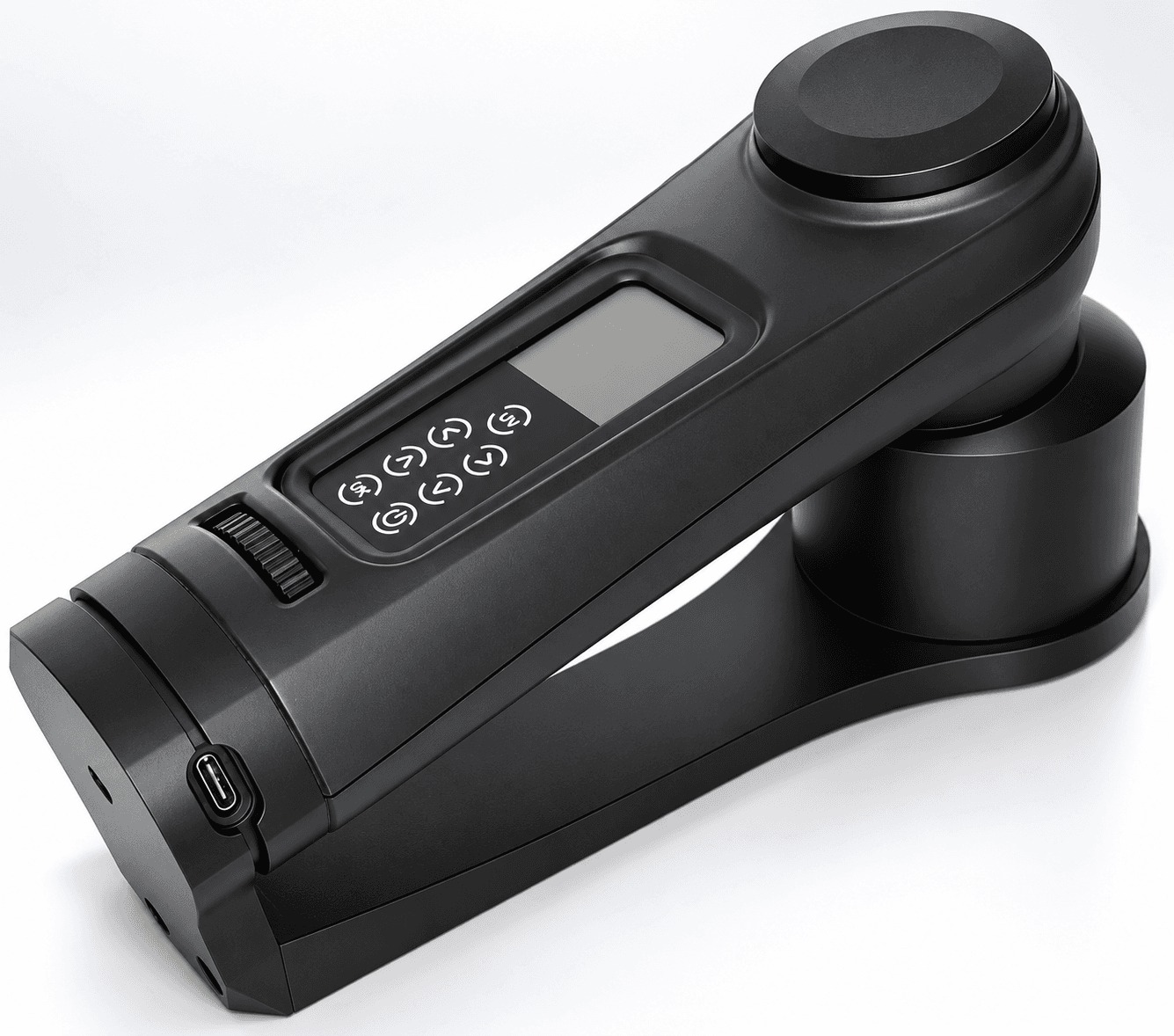
C-Eye – our cross-linking system
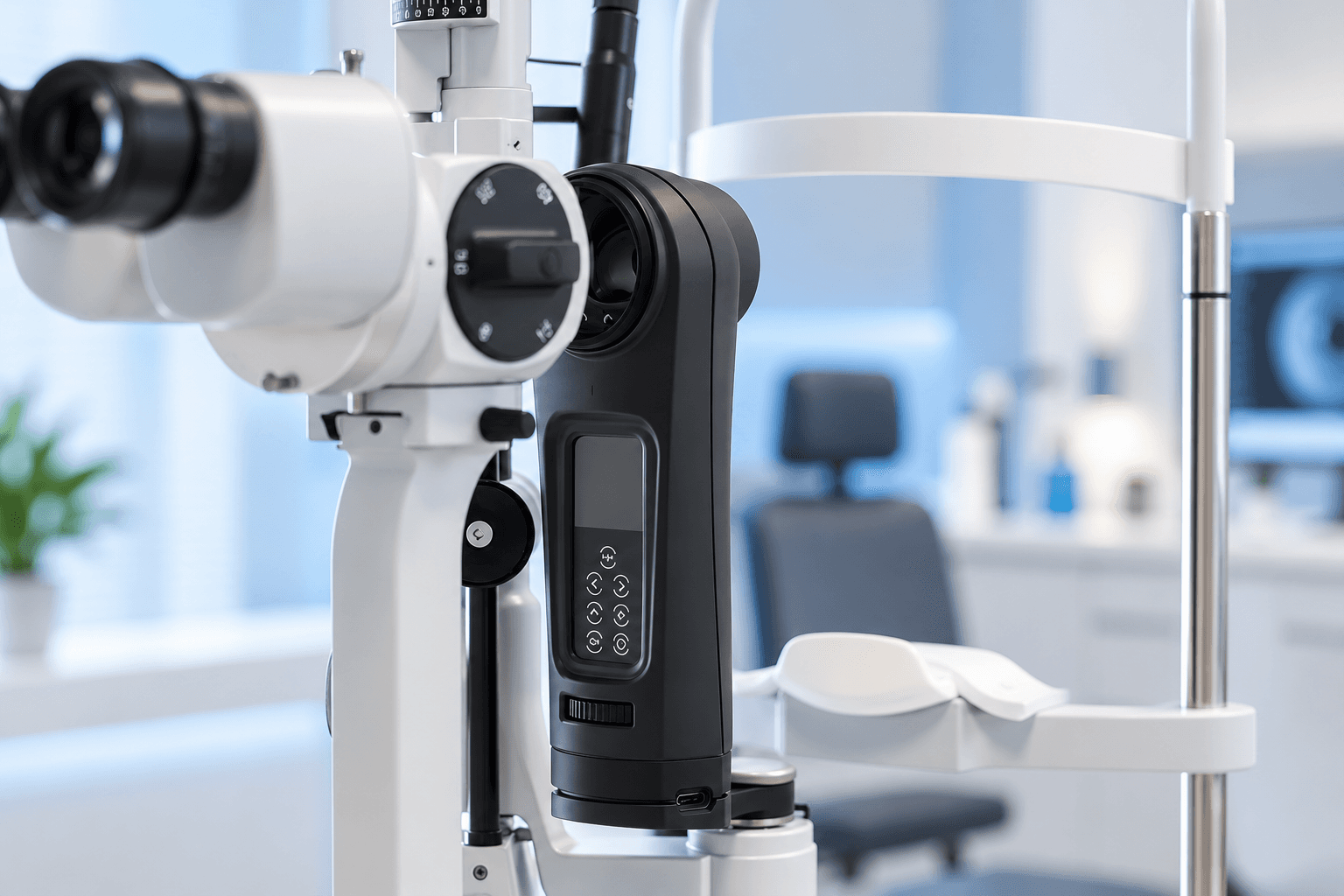
Cross-linking is carried out with the C-Eye, a system built specifically for corneal cross-linking. It governs the two things that matter most to the result: the UV dose the cornea receives, and how closely that dose can be matched to your particular cornea.
Established protocols are preset – from the classic Dresden protocol to accelerated, high-fluence and sub-400 protocols for thinner corneas.
With or without removing the epithelium – epi-off or epi-on, depending on corneal thickness and how the keratoconus is progressing.
Irradiance, time and total dose are set and documented for every treatment, so it can be followed up and repeated.
PACK-CXL – the same system is also used for cross-linking in corneal infections.
Which protocol suits you is decided at the pre-examination, where we measure the thickness and shape of your cornea. Read more about our equipment
How does the treatment work?
The treatment is done as an outpatient procedure and usually takes about 60–90 minutes per eye. One eye is treated at a time.
The eye is first numbed with anaesthetic drops. In an epi-off treatment the thin outermost cell layer of the cornea (the epithelium) is then removed so that vitamin B2 drops (riboflavin) can penetrate into the cornea.
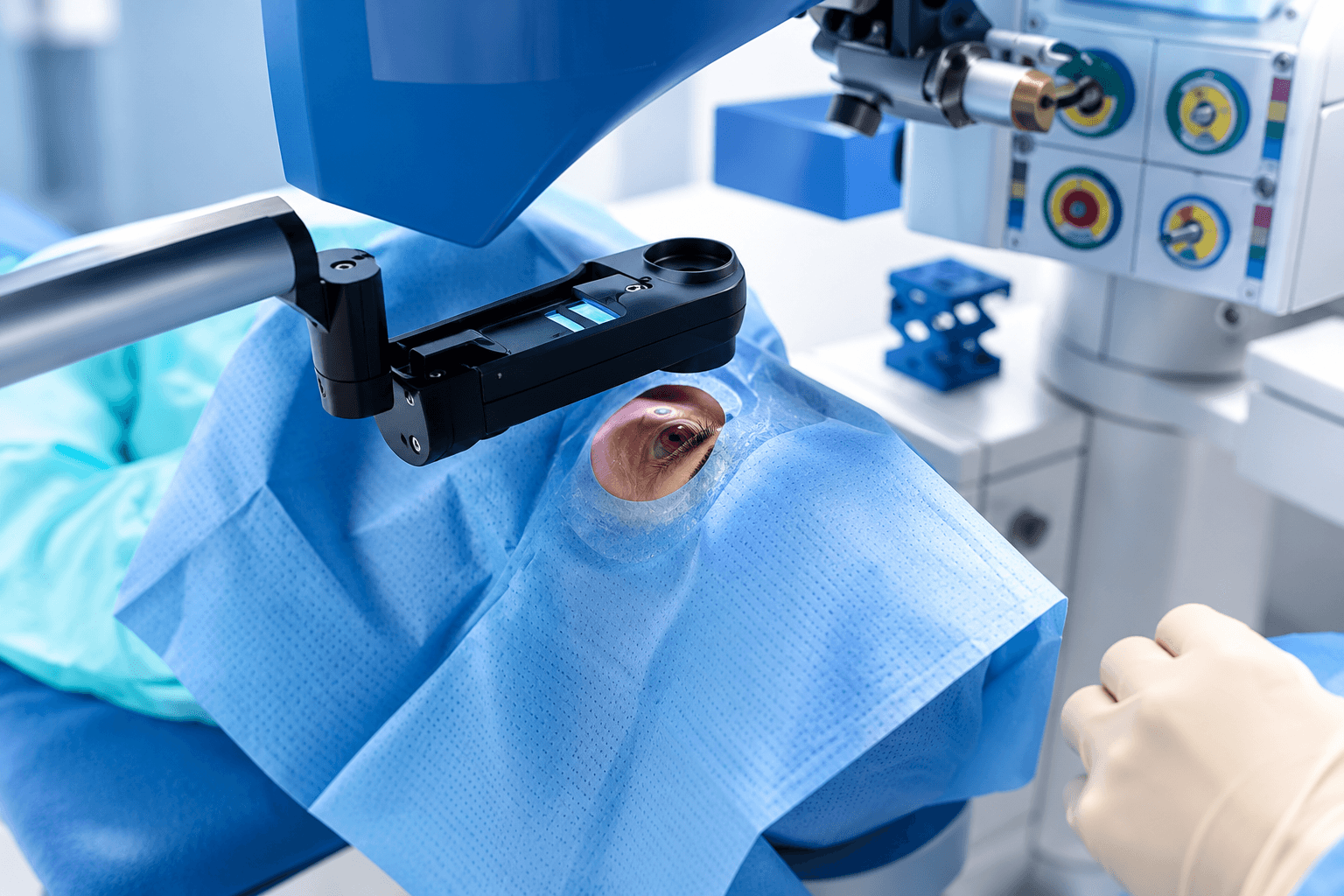
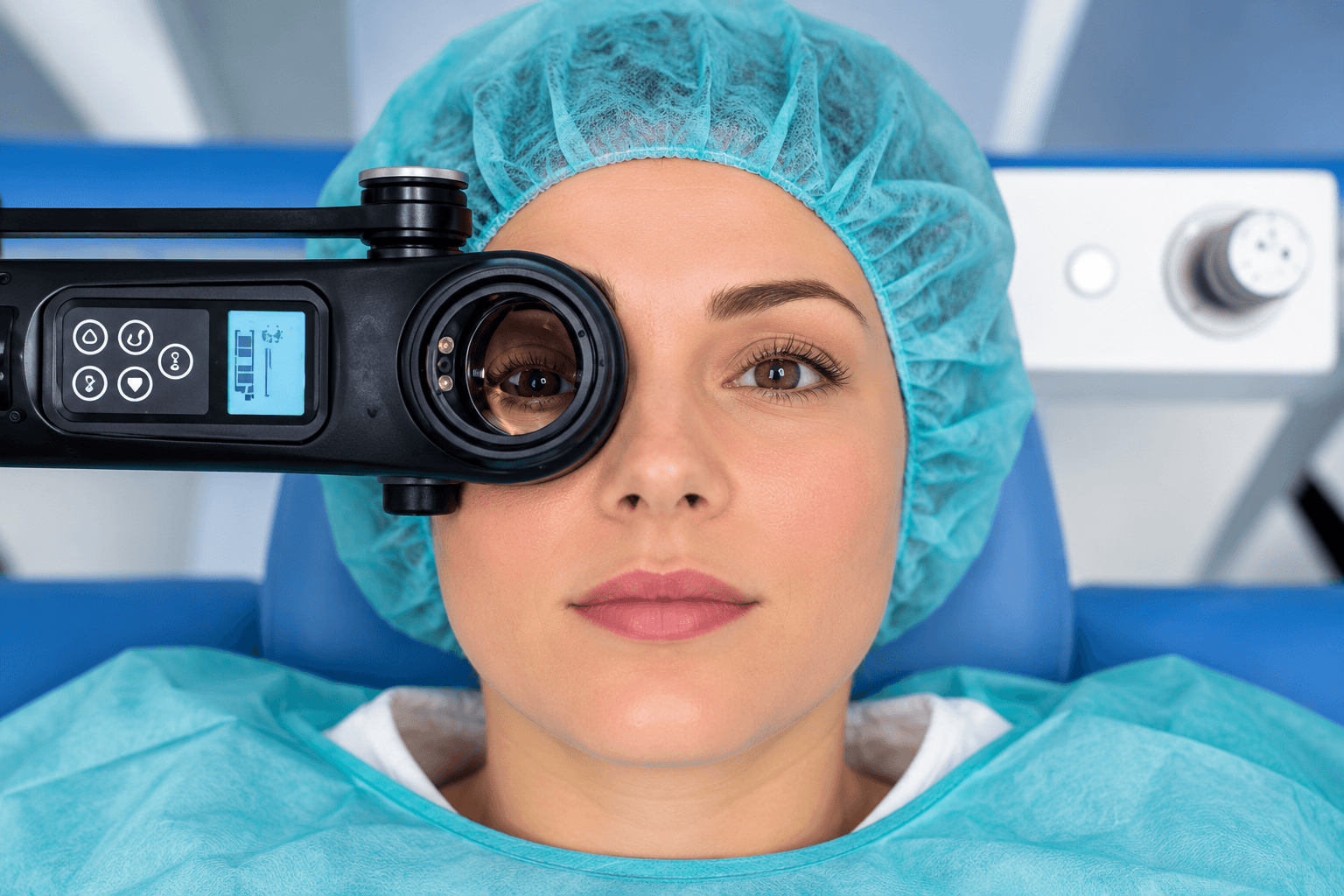
Riboflavin and UV light
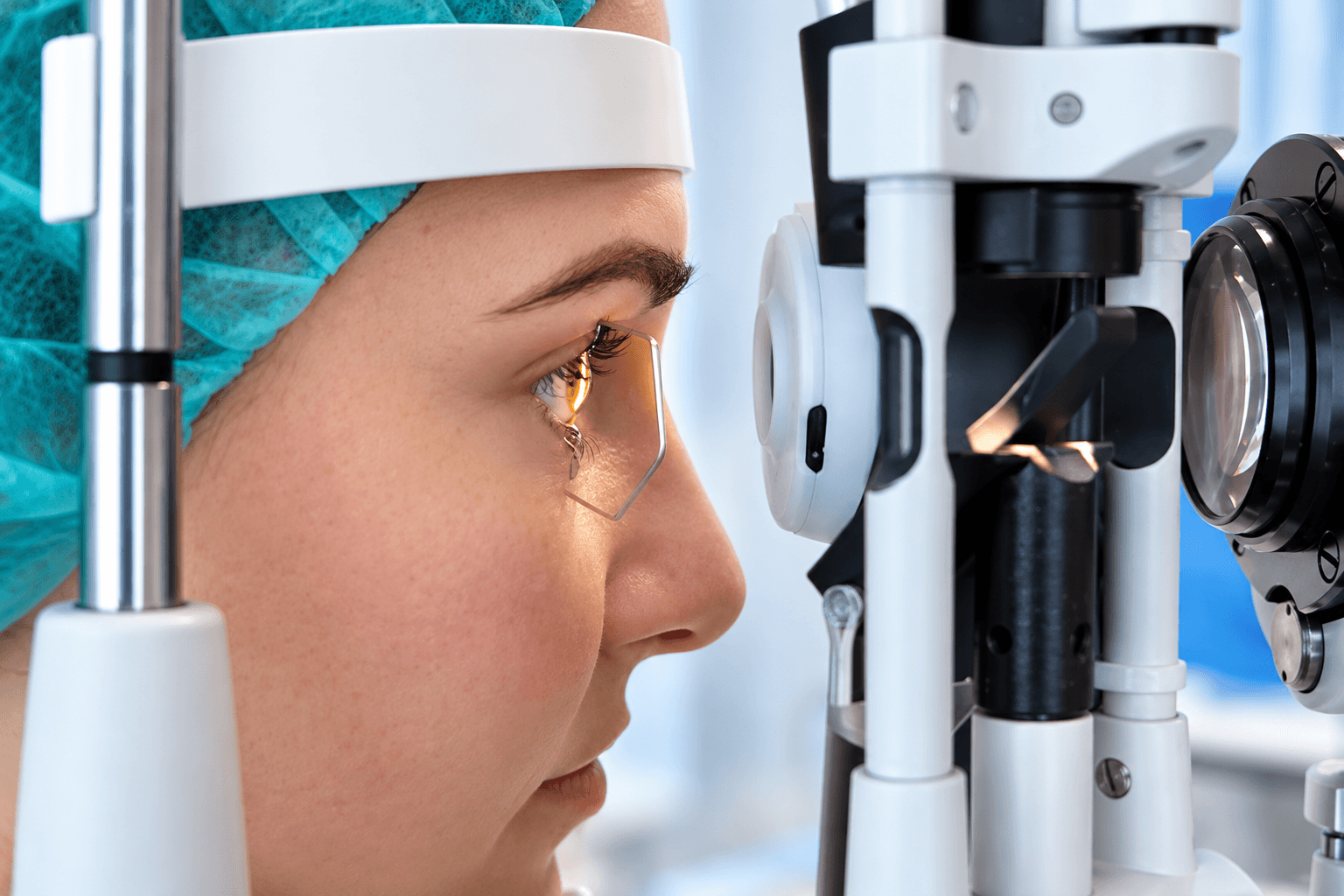
Once the cornea is saturated with riboflavin, the eye is treated with controlled UV light for a set length of time.
The riboflavin does two jobs: it is the substance that reacts with the light, and it absorbs much of the UV light so that the deeper structures of the eye are protected.
A controlled UV dose and the chosen protocol
The UV light is delivered by the C-Eye. Irradiance and time are set according to the protocol chosen for your cornea, and the dose is documented.
During the treatment you lie back and look up towards the light. The eye is kept moist with drops, and we tell you where we are in the treatment as we go.
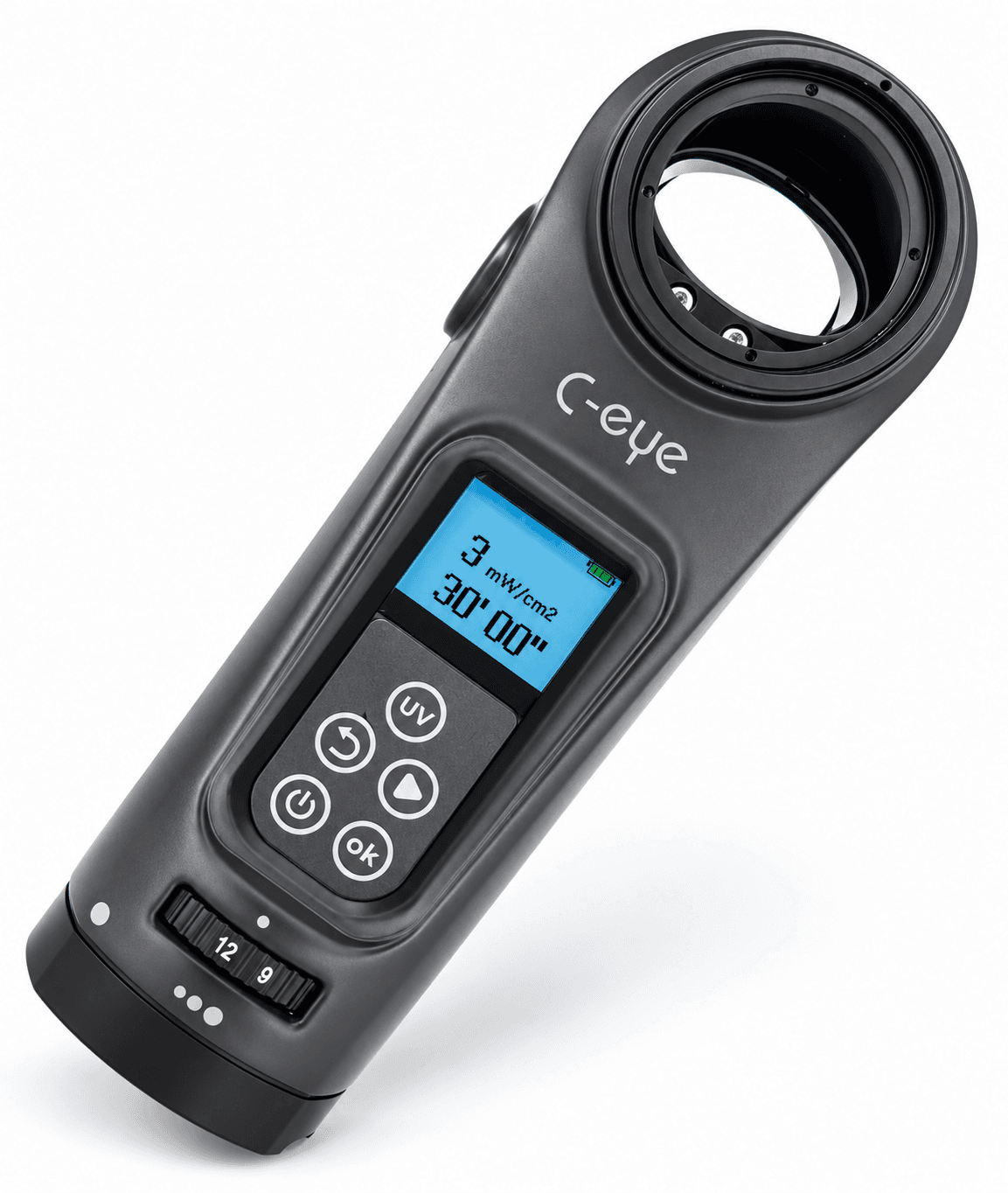
The result: new bonds in the cornea
The combination of riboflavin and UV light creates new bonds ("crosslinks") between the collagen fibres of the cornea, which makes it stronger and more stable.
It is these bonds that let the cornea better resist further change in shape.
After the treatment
A protective bandage contact lens is placed on the eye after the procedure and usually stays in for a few days while the surface heals. It is normal to experience:
a gritty feeling and irritation
sensitivity to light
watering
blurred vision for the first few days
Most people can return to lighter everyday activities within a few days, but vision can fluctuate during the first weeks and months after treatment.

What results can you expect?
The main goal of cross-linking is to stop or slow the progression of keratoconus. It is not primarily intended to improve vision, although some patients do notice some improvement over time.
The earlier progression is detected and treated, the better the chance of preserving the shape of the cornea and visual function in the long term.
Safety and experience
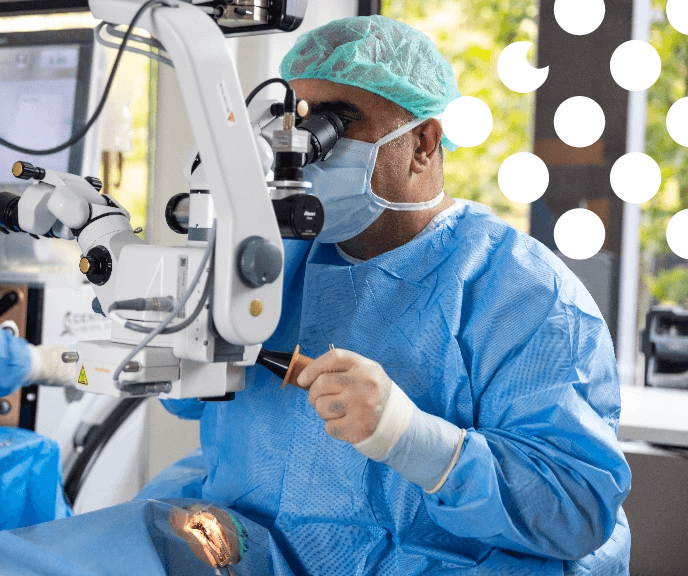
Cross-linking is today an established and internationally used treatment, well documented and with a high level of safety when it is carried out after a thorough examination and assessment of the cornea. Cross-linking at X-Vision is performed by Dr Khashayar Memarzadeh, who was responsible for the corneal department at Skåne University Hospital.
Pre-examination
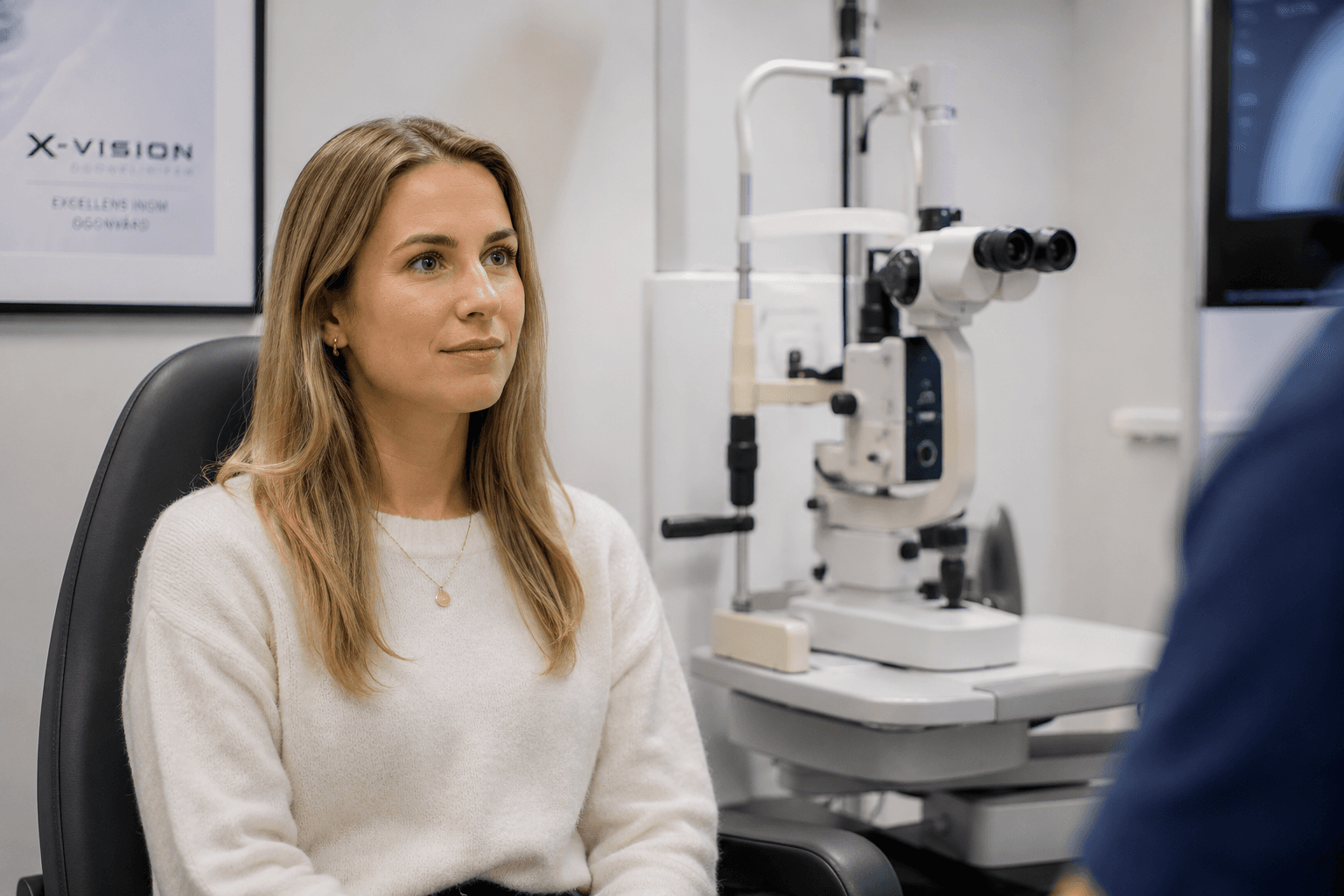
The pre-examination is what lays the groundwork for a good treatment result.
Cost of the pre-examination: 1,500 SEK. It is more extensive than our free vision screening and includes corneal topography and thickness measurement.
Cost of the treatment: 13,000 SEK per eye.
Contact us – we'll help you find the right treatment
Which treatment suits your eyes? Tell us briefly what you would like help with and we will get in touch. Our experienced specialists answer your questions and guide you to the treatment or examination that fits your needs.

X-Vision Ögonklinik
Hyllie Stationstorg 2
215 32 Malmö